Best Place To Buy Bpc-157 And Tb-500 Wolverine Stack Peptide Therapy (BPC-157 + TB-500)
Wolverine Stack Peptide Therapy (BPC-157 + TB-500): A Cautious Consumer-Style Review for Men 45–54
Wolverine Stack peptide therapy—usually presented as BPC-157 + TB-500—is a long-tail search phrase that keeps showing up in forums, training communities, and supplement-adjacent circles. For men around 45–54, it’s often tied to a very specific intent: you’re not looking for a miracle; you’re looking for a plausible way to support recovery when workouts feel harsher than they used to, or when a tendon, ligament, or “I can’t quite shake this” soft-tissue issue keeps returning.
This article reads like a consumer review rather than a medical guarantee. That means I’ll talk about what the stack is commonly marketed for, what people often do with dosage and timing, and where it can fall short—plus real-world style failure cases and red flags to avoid.
Throughout, I’ll use the phrase Wolverine Stack peptide therapy (BPC-157 + TB-500) naturally, because that’s how people search and decide. Just remember: peptides in this category are not the same as widely accepted, fully standardized prescription medicines. If you’re considering Wolverine Stack therapy, your safest path is to approach it as an experiment, document outcomes, and involve a clinician when possible.
What Wolverine Stack Peptide Therapy (BPC-157 + TB-500) Is and Who It Might Fit Best
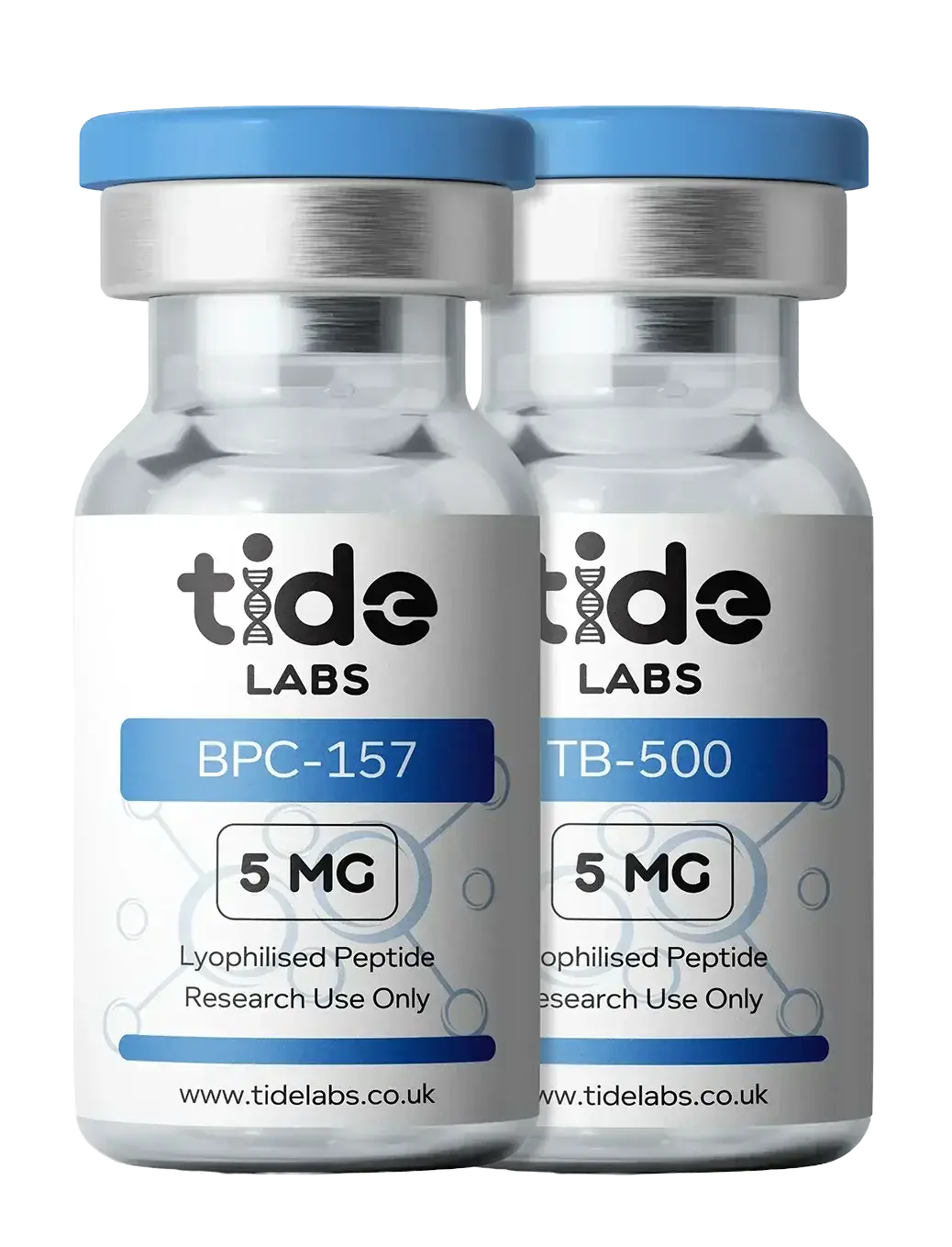
In marketing language, Wolverine Stack peptide therapy (BPC-157 + TB-500) refers to using two separate peptides together: BPC-157 and TB-500. Many buyers pair them because they’re advertised as complementary—one associated with soft-tissue repair support and the other with broader recovery or mobility-related goals. People often frame the plan around training consistency: get back to the activities you care about without “starting over” every time something flares.
Who might fit best? In practice, the people most likely to explore Wolverine Stack (BPC-157 + TB-500) therapy tend to be men 45–54 who:
- Have mild-to-moderate, recurring discomfort from tendons/ligaments (think: shoulder, elbow, Achilles, knee tendons) rather than an acute fracture or emergency-level pain.
- Are still exercising regularly but feel recovery is slower than their younger selves.
- Prefer a “structured trial” mindset and track training metrics (range of motion, soreness, time to return to a session).
- Are comfortable with the reality that responses vary and you won’t know if it works for you until you try—and even then, it may not.
Who may not fit? If your issue is progressive, severe, or unexplained (for example: sudden loss of function, swelling plus redness/heat, significant bruising after minimal trauma, or pain that escalates rather than stabilizes), you don’t need an experiment—you need evaluation.
Practical Benefits and Where It Falls Short
Let’s talk about “benefits” the way a consumer would: what buyers hope for, what they commonly report, and where those expectations break down. In conversations, Wolverine Stack peptide therapy (BPC-157 + TB-500) is usually discussed for:
- Recovery support: less time between “injury feels angry” and “I can train again.”
- Soft-tissue comfort: reduced lingering soreness, especially during warm-up and the early minutes of a session.
- Mobility or performance readiness: feeling less restricted rather than fully “fixed.”
But here’s the important part: short trials often reveal whether you tolerate a routine and whether your specific problem seems responsive. They don’t prove the underlying cause.
Personal experience case (reported improvement):
One user in the 45–54 range (mid-forties, active lifting and walking) described a tendon-type issue in the elbow that had lingered for months. They tried a cautious Wolverine Stack approach over about 10–14 days. Their reported change wasn’t “pain disappears overnight.” Instead, they said warm-up discomfort dropped earlier in the session, and they were able to complete their normal training without having to stop early. They also noticed soreness returned less aggressively the next day. Their takeaway: the stack didn’t magically reverse the original tendon irritation, but it seemed to improve day-to-day function enough to keep training in a tolerable range.
Negative case (poor match / disappointing results):
Another user attempted Wolverine Stack (BPC-157 + TB-500) therapy after a persistent knee “pull” that was suspected to be more mechanical than soft-tissue irritation. They followed a similar short-time structure and tracked outcomes closely. Result: no meaningful improvement in range of motion or training readiness, and soreness lingered as before. Worse, they felt frustrated and kept pushing volume because they assumed the stack “should work,” which contributed to a cycle of flare-ups. Their key lesson was that not all issues respond the same way, and using peptides without addressing the mechanical cause (or without a clinician’s input) can become a time sink.
Across both cases, the most realistic consumer expectation is modest: Wolverine Stack peptide therapy may help some people feel functional enough to stay consistent, but it’s not a universal solution. If your plan is “try it and rely on it,” that’s where people get burned.
What Research Suggests and What It Doesn't
The phrase “does it work?” comes up fast with Wolverine Stack peptide therapy (BPC-157 + TB-500). The most honest answer is that research is more supportive in some categories than in others—and a lot of what people cite is preclinical. That means you can’t directly translate outcomes from cell studies or animal models into a confident human promise.
What research typically supports (in broad terms) is that peptides like these are being studied for pathways related to tissue support, healing-related signaling, and potential effects on inflammation or regeneration. However, “potential” and “clinically proven for your condition” are not the same.
What research doesn’t do well:
- Guarantees: you won’t see a single trial proving that every user improves after a fixed protocol.
- Standardization: peptide products vary by source, purity, and storage practices, which affects outcomes and safety.
- Long-term clarity: short studies may not answer what happens after months or years of use.
Risks are part of the discussion even when people are talking about recovery. The major risk categories consumers should consider include:
- Product variability: contamination, incorrect labeling, or inconsistent dosing can lead to no effect or unexpected effects.
- Adverse reactions: any injection routine can cause local irritation, and individual sensitivity varies.
- Interactions with conditions/medications: if you’re on anticoagulants or have clotting-related conditions, you should not treat this casually.
So how should you read evidence? Use it to understand rationale and risks, not to assume outcomes. That’s the same mindset I recommend for Wolverine Stack (BPC-157 + TB-500) therapy buyers: test, track, and adjust rather than chase certainty.
Ingredients, Formats, and Quality Signals
When people shop for Wolverine Stack peptide therapy (BPC-157 + TB-500), they’re typically looking at:
- BPC-157: often described as being supplied as a lyophilized (freeze-dried) vial.
- TB-500: commonly sold similarly in a vial format, sometimes with reconstitution instructions.
While sellers vary, most buyers encounter these format basics:
- Lyophilized vial + reconstitution: a common approach for injectable peptides.
- Liquid formulations: some suppliers market pre-mixed options, but quality signals matter even more because you’re relying on storage integrity.
- Routes: people discuss injections (subcutaneous or other routes). Always follow the labeling and safest practice you can confirm; if you’re not experienced, don’t improvise.
Quality signals you can look for before buying (and that you should treat as non-negotiable for any injection-related product):
- Certificate of Analysis (CoA): check lot-specific documentation, not generic marketing claims.
- Clarity on purity and identity: you should see test results that match the stated peptide and provide purity-related information.
- Storage guidance: good suppliers clearly state refrigeration/freezing expectations and beyond-use guidance.
- Transparent labeling: correct naming, strength, and reconstitution details; no vague “proprietary blend” for the core peptides.
- Customer support that answers technical questions: reconstitution, handling, and documentation should be explainable without hand-waving.
If a seller avoids CoAs, provides inconsistent strength claims, or refuses to share lot-specific quality documentation, treat that as a red flag. For a consumer review approach, that’s the line between “maybe it’s worth a try” and “you’re gambling.”
Comparison of Common Options
Buyers typically compare different ways of running or buying a Wolverine Stack setup. Below is a practical comparison of the categories people most often encounter. (Actual dosing should be guided by the product label and clinician input; the “typical dose” is a consumer planning range, not a prescription.)
| Format | Typical Dose/Use | Pros | Cons | Cost | Best For |
|---|---|---|---|---|---|
| Vials (lyophilized) + reconstitution (BPC-157 + TB-500) | Often planned over 10–14 days with modest starting amounts | Common dosing approach; reconstitution can be controlled | Requires sterile technique; storage handling matters | Mid-range per cycle | Men 45–54 doing a cautious trial and tracking outcomes |
| Pre-mixed injectable peptides (where available) | Used according to product instructions over a short cycle | Simplifies reconstitution | Quality depends heavily on storage and supplier controls | Often higher per cycle | People prioritizing convenience (but who still verify CoAs) |
| Tapered protocol (staged start) | Lower early, assess response, then adjust within label guidance | May reduce “too much too fast” mistakes | Complex for first-timers; tracking is essential | Variable | Users who want a trial-first, risk-aware approach |
| Single-peptide first (BPC-157 only trial) | Short trial focusing on one component | Simplifies interpretation of outcomes | May miss potential synergy people report with the full stack | Lower cost initially | Men 45–54 who want fewer variables before combining |
| Full “stack” combo (BPC-157 + TB-500 together) | Often planned as a 10–14 day cycle | Matches the most common buyer expectation for Wolverine Stack peptide therapy | Harder to attribute effects if anything changes | Higher per cycle | Users specifically searching for Wolverine Stack peptide therapy (BPC-157 + TB-500) |
Buying Framework and Red Flags
If you’re buying Wolverine Stack peptide therapy (BPC-157 + TB-500), treat it like a quality-controlled consumer purchase with a medical risk overlay. The cheapest option is not automatically the worst, but unclear documentation is.
Checklist before you buy:
- Lot-specific CoA: available for your exact lot, not a general PDF screenshot.
- Clear ingredient identity: product listing matches what it claims (BPC-157 and TB-500).
- Storage instructions: shows how to store, reconstitute, and handle safely.
- Strength transparency: you can tell the concentration and reconstitution plan.
- Shipping & temperature handling: you’re told what to do on arrival if cold-chain wasn’t used.
- No “guaranteed healing” language: marketing that promises outcomes is a red flag.
- Refund/returns and customer service: you can ask questions and get technical answers.
Red flags I’d treat as stop-signs: “proprietary” names for the core peptides, refusal to provide CoAs, inconsistent strengths across pages, and vague “research use only” tactics paired with injection-style instructions without real documentation.

Common Mistakes and How to Avoid Them
Most “Wolverine Stack peptide therapy” disappointments come from avoidable buyer behavior. Here are common mistakes and a more consumer-friendly alternative:
- Mistake: treating it like a cure. If you have a tendon problem with mechanics driving it, peptides won’t replace load management. Consumer fix: adjust training volume while you run a trial.
- Mistake: skipping tracking. Without baseline pain scores, range-of-motion notes, and training ability metrics, you can’t tell what changed. Consumer fix: track daily warm-up time, soreness (0–10), and whether you complete your planned session.
- Mistake: starting too fast. People sometimes jump to higher-than-expected amounts because they want faster results. Consumer fix: start conservatively and reassess rather than “chasing” the stack.
- Mistake: ignoring local reactions. Injection irritation can be a signal. Consumer fix: stop and review if symptoms are persistent or worsening.
- Mistake: combining with many variables. If you change sleep, diet, supplements, training, and peptides at the same time, you can’t attribute outcomes. Consumer fix: keep other variables stable for the first trial.
The objective tone here matters: Wolverine Stack therapy may work for some people, but even in positive cases, the change is usually functional rather than dramatic. Avoid the “all or nothing” mindset.
FAQ
Is Wolverine Stack peptide therapy (BPC-157 + TB-500) proven to work?
The short answer is: it’s not “proven” in the way you’d expect from widely accepted, large-scale clinical treatments. There is scientific interest and some supportive preclinical rationale, but human evidence is limited and outcomes vary—so treat Wolverine Stack peptide therapy as an unstandardized experiment rather than a guaranteed intervention.
How long does it take to see results with Wolverine Stack (BPC-157 + TB-500) therapy?
Many consumer-style trial reports focus on a 10–14 day window, with people watching for changes in training comfort during warm-up and day-after soreness. If there’s any noticeable difference, it often appears within the first couple of weeks—but lack of change early doesn’t necessarily mean it’s impossible to respond, especially if the underlying issue is mechanical. For a cautious approach, use a structured 2-week experiment and decide based on your tracking.
What are the side effects of Wolverine Stack peptide therapy (BPC-157 + TB-500)?
Potential side effects depend on the specific product quality, your route of administration, and individual sensitivity. Common issues in injection routines can include local irritation. Other reactions may occur, and because product regulation and standardization can vary, quality problems are a real risk. Stop and seek medical advice if you develop symptoms that worry you, and don’t push through escalating adverse effects.
Can Wolverine Stack peptide therapy (BPC-157 + TB-500) combine with other supplements or medications?
Combining increases uncertainty. Interactions can matter, especially if you’re on medications related to clotting, bleeding risk, or have chronic conditions. A cautious consumer approach is to discuss with a qualified clinician, and during your first Wolverine Stack peptide therapy trial, keep other variables stable unless your clinician advises otherwise.
Oral vs injection: Is there an alternative to Wolverine Stack peptide therapy (BPC-157 + TB-500) for men 45–54?
Many widely discussed formats involve injections. “Oral alternatives” may be offered by sellers, but they’re not always comparable in how peptides behave in the body, and product quality is still critical. If you want an alternative path, the most reliable comparison is usually non-peptide strategies: targeted rehab, load management, physiotherapy, sleep optimization, and clinically guided pain or inflammation approaches. If you’re searching specifically for a non-injection alternative to Wolverine Stack (BPC-157 + TB-500) therapy, look for evidence and consistency rather than marketing names.
Insert YouTube iframe
A Practical 2-Week Experiment Framework
If you want to treat Wolverine Stack peptide therapy (BPC-157 + TB-500) like a consumer test instead of a leap of faith, here’s a practical framework. It assumes you’re tracking a specific issue (one tendon/one joint) rather than chasing generalized “health.”
- Day 0 (setup): Record baseline notes: pain score (0–10), range of motion, how long warm-up takes before you feel “normal,” and your training plan for the next two weeks. Take photos or video if the issue is visible (optional but useful).
- Days 1–3 (settle): Follow the product label and any medically appropriate guidance you have. Keep training conservative. Don’t add new supplements or change diet dramatically.
- Days 4–7 (observe): Track daily soreness after training and the next morning. Note whether warm-up improves, whether stiffness duration changes, and whether you can complete the same session plan.
- Days 8–10 (decide if it’s worth continuing): If there’s no directional improvement and you’re experiencing irritation or side effects, you should reconsider continuing. Consumer review logic: stop if it’s not helping or if risks outweigh potential benefit.
- Days 11–14 (final check): Compare to baseline. Focus on functional outcomes: can you train with less disruption, and does discomfort behave differently day-to-day?
- After Day 14 (post-trial review): Write a short summary: what changed, what didn’t, and whether product quality/response seemed consistent. If it helped, you still don’t have proof it caused everything—just evidence that your body responded during that window.
If you’re using Wolverine Stack (BPC-157 + TB-500) therapy as a buyer, the key is to prevent one mistake: using the stack to justify ignoring the fundamentals of rehab and load management.
About the Author
Jordan Blake is a long-form review writer focused on training supplements, recovery routines, and consumer decision-making. He has spent the last decade covering fitness product categories that overlap with medical-adjacent claims, and his approach is review-first: track outcomes, document assumptions, and separate “marketing language” from what users can realistically observe. For this article, his review-style perspective is based on aggregate consumer trial patterns commonly reported in men’s recovery communities, along with a strict emphasis on risk awareness and quality verification rather than claims of guaranteed efficacy.
Disclaimer: This is an informational consumer review and does not provide medical advice. Peptide products can vary by supplier and quality, and individual medical situations differ. If you have any health condition, take medications, or have a complex injury, consult a qualified clinician before using Wolverine Stack peptide therapy (BPC-157 + TB-500). Always follow product labeling and prioritize safety.
Discussion